
What the Click? Marketing Glossary / Organic vs. Paid Search
WHAT THE CLICK? · Get Found
Organic vs. Paid Search: Which Does Your Business Need?
Organic search refers to unpaid search listings selected by a search engine. Paid search refers to advertising placements bought through an advertising platform. Both can help people discover a business, but they use different systems. Paying for an ad does not purchase a higher organic ranking.
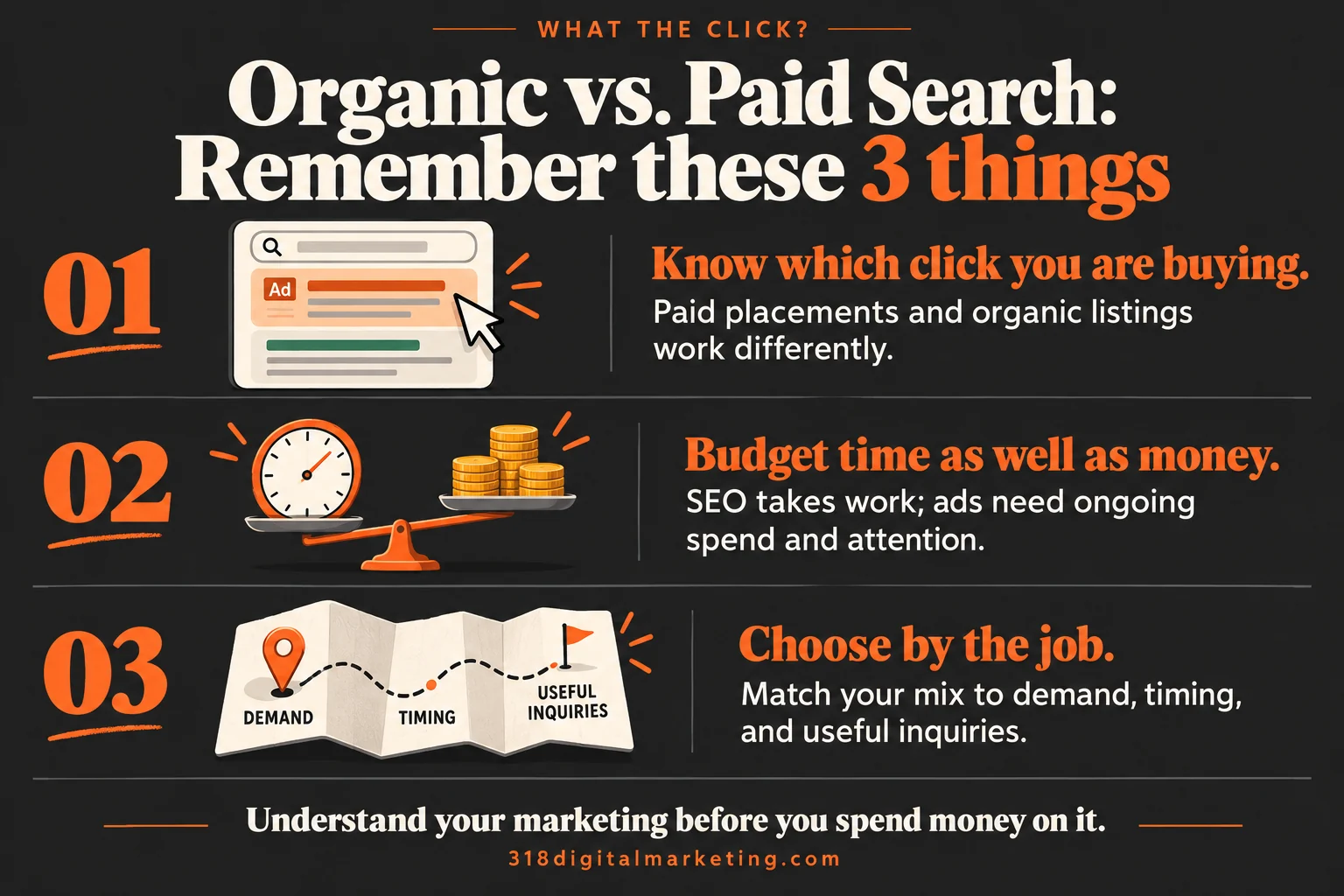
Remember these 3 things about Organic vs. Paid Search
Know which click you are buying. Paid placements and organic listings work differently.
Budget time as well as money. SEO takes work; ads need ongoing spend and attention.
Choose by the job. Match your mix to demand, timing, and useful inquiries.
By 318 Digital Marketing · Reviewed October 19, 2026
How organic search works
Search engines discover, process, and select pages for relevant searches. Google’s SEO Starter Guide explains the fundamentals of helping a search engine understand a site. Improving SEO can involve useful content, accessible pages, internal discovery links, and technical maintenance. An ordinary organic click has no search-engine click fee, but the work behind the page still costs time or money.
How paid search works
An advertiser sets up campaigns, targeting, ads, and bidding through a platform. Google Ads describes its advertising service as a way to reach people interested in an offer. Many search campaigns use a pay-per-click model. Auction rules and ad relevance affect whether ads appear. A budget buys the opportunity for exposure and visits, not a guaranteed customer.
Which can help sooner?
Ads can start generating visits after the campaign is approved and serving, while organic improvements often need time to be discovered and compete. That makes ads useful for some tests or time-sensitive demand. It does not make every campaign instantly effective. A weak offer can disappoint at impressive speed when you pay to show it more often.
A North Louisiana example
Imagine a Minden service business preparing for seasonal demand. Focused ads may support a specific service while useful website pages explain its work and coverage over time. If the business cannot answer more calls or deliver the work, increasing either traffic source is premature. Start with actual demand, capacity, and the value of the jobs you want.
Can the two work together?
Yes. They may reach different searches, support different time horizons, and reveal useful questions. Keep their reporting distinct, then assess the combined result. Check branded versus nonbranded demand and watch for overlapping claims about the same inquiry. Using both is a strategy choice, not a requirement to buy two services before you are allowed to get started.
Ask before you choose a mix
How urgent is the need? Is there relevant search demand? What condition is the website in? What can we afford to test? Which inquiries can we serve profitably? Ask for a plan with measurable work and review points. Avoid an either-or argument that ignores the business problem you are trying to solve.
FREQUENTLY ASKED QUESTIONS
Still wondering?
Quick answers before you go. Open any question below.
Is organic search free?
There is no ordinary organic click charge from the search engine, but content, development, and ongoing improvements require resources.
Will running ads improve organic rankings?
Paying for an advertising placement does not buy a better organic position. Evaluate paid and organic work under their own systems and goals.
Should a new business start with ads or SEO?
It depends on demand, urgency, budget, website readiness, and capacity. Fixing basic clarity and conversion problems is useful before scaling either channel.
What happens when I stop paying for ads?
Ads stop serving when the campaign is paused or cannot serve. Earlier exposure may still influence customers, but the paid placement itself is not permanent.
Do I have to use both?
No. Choose a mix you can resource and evaluate. Some businesses start with one channel, learn what works, and expand when the evidence supports it.
Put the idea to work
Want help applying this to your business? Got big ideas? Let’s talk.
Examples are illustrative. Features, requirements, and results vary; use the linked documentation to check the details that apply to your situation.